

Commonwealth Drafts Framework for Fighting Corruption

By Khalifa Hemed
Published June 5, 2019
 A framework to help combat graft within the Commonwealth is being developed.
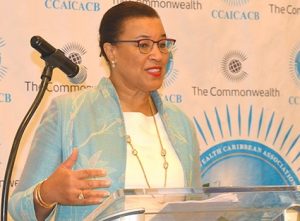
Speaking in Cayman Islands during the fifth annual regional meeting of the Caribbean heads of anti-corruption agencies, Patricia Scotland, Secretary-General
of the Commonwealth, said the document, known as The Commonwealth Anti-Corruption Benchmarks, is being developed by the Secretariat in consultation with
member countries to assist in combating the vice that is reported to be costing the global economy estimated US$2 trillion annually.
RELATED: Commonwealth Roots for Free and Open Global Trade
 The framework that provides clear steps to promote integrity and combat graft within public and private sectors, the Secretary-General said, will be presented to the Commonwealth Heads of Governments in Rwanda in 2020.
“This package consists of a set of 22 benchmarks, covering topics from sanctions for corruption offences to investigating and prosecuting authorities, and
from political lobbying to the disclosure of asset ownership,” she said.
RELATED:Afro-Pop Star Releases Dance-Tinged Love Ballad
Saying “Each benchmark is defined by a principle and contains detailed guidance for meeting the set level of achievement,” Patricia Scotland noted that if
adopted, The Commonwealth Anti-Corruption Benchmarks, whose principles and guidance she said are consistent with international standards, “would go further
in covering other areas of concern not previously addressed.”
The Secretary-General stressed that the work of anti-corruption agencies must continue with renewed vigour in order to fully achieve the 16 Sustainable
Development Goals (SDGs).
RELATED: Corruption Undermines Development Across Africa
Patricia Scotland also referred to the Commonwealth’s practical toolkit designed to help countries plan, track and coordinate SDGs implementation more effectively.
The five-day meeting that began on June 3 brings together the Caribbean’s most senior officials tasked with thwarting illicit financial flows.
RELATED: Why Investing in Water-Based Resources Makes Socio-Economic Sense


